Protecting Your Clients’ Purchasing Power
INFLATION RISK AND RETIREMENT

Help clients protect purchasing power and preserve dignity in retirement. Explore strategies to address inflation risk through income planning, investments, and advisor-led conversations.
Key Takeaways
Inflation erodes retirement income over time—sometimes cutting real value in half.
Purchasing power risk affects everyday essentials like food, housing, and healthcare.
Every client profile is different: singles, couples, pre-retirees, and retirees need tailored strategies.
Layered planning—annuities, diversified investments, and income allocation—can help beat inflation.
Inflation is one of those risks clients feel every day but rarely plan for. Yet retirees may struggle to maintain their desired lifestyle as living expenses such as food, housing, and healthcare continue to increase over time, eroding their savings. Over a 20- to 30-year retirement, that erosion, sometimes called purchasing power risk, can dramatically change a client’s lifestyle.
For advisors, inflation risk conversations are about more than budgeting. They’re about helping clients preserve dignity and quality of life in retirement. And while inflation often feels invisible in the short term, it compounds in ways that make long-term planning essential.
“Inflation isn’t just about rising costs—it’s about maintaining lifestyle and dignity through retirement.”
- Matthew McGinley, Western Divisional Sales Manager, Delaware Life
WHAT IS INFLATION’S IMPACT IN RETIREMENT?
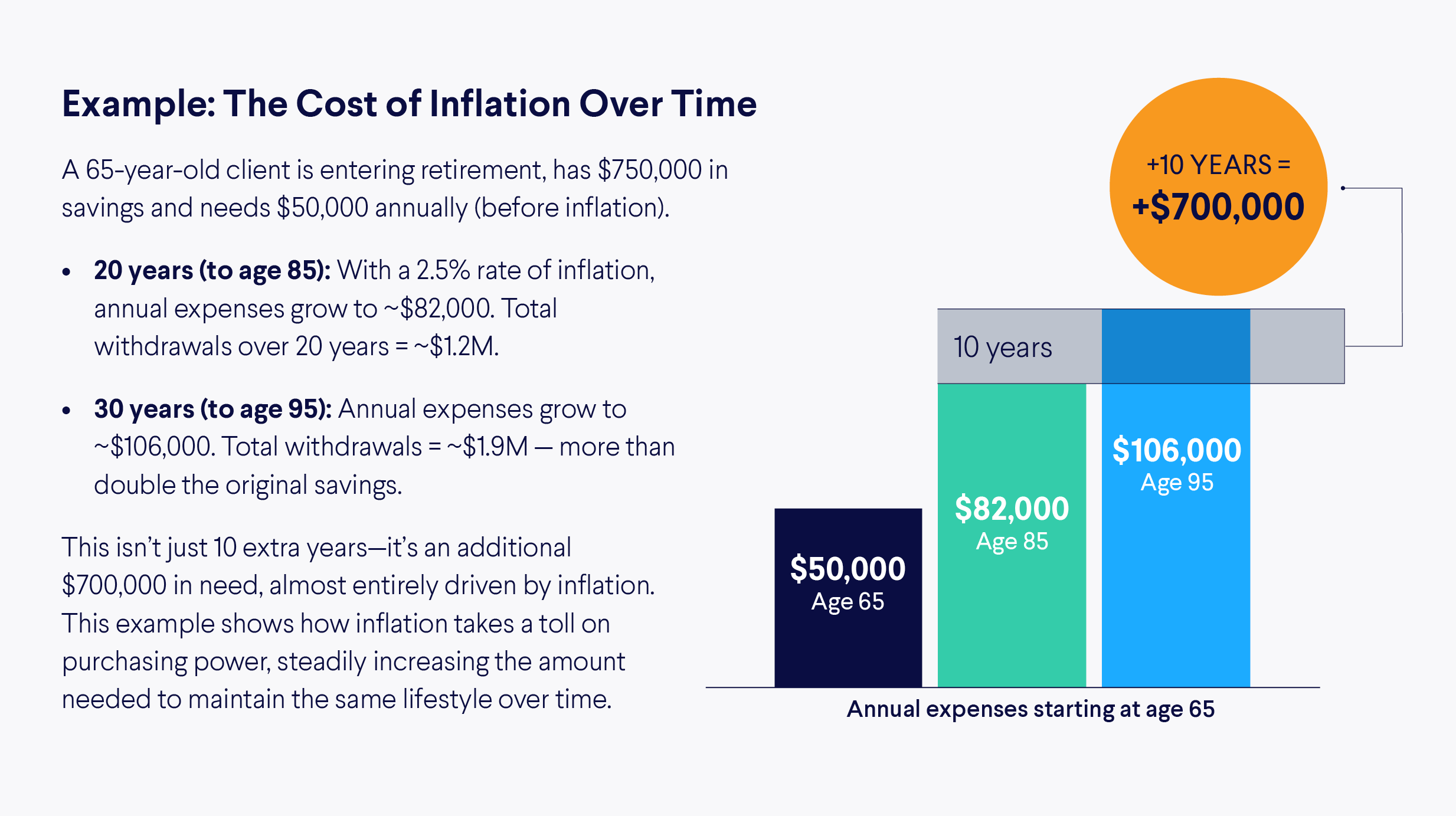
Inflation risk in retirement is the danger that retirement savings won’t be worth as much in the future as they are today. Even modest annual inflation (2.5–3%) can cut the real value of income streams in half over a 30-year retirement. The inflation rate directly impacts how quickly the purchasing power of retirement income erodes, making it crucial to factor into retirement planning.
Unlike market volatility, inflation often goes unnoticed until it compounds. That’s why it’s so important for advisors to build strategies that anticipate its impact. Over decades, long-term inflation can significantly reduce the value of savings, underscoring the need for careful, forward-looking planning.
Expenses like healthcare and housing often rise faster than general inflation, hitting retirees hardest. Modeling different scenarios, including various macroeconomic conditions, is essential to prepare for the range of possible outcomes in retirement.
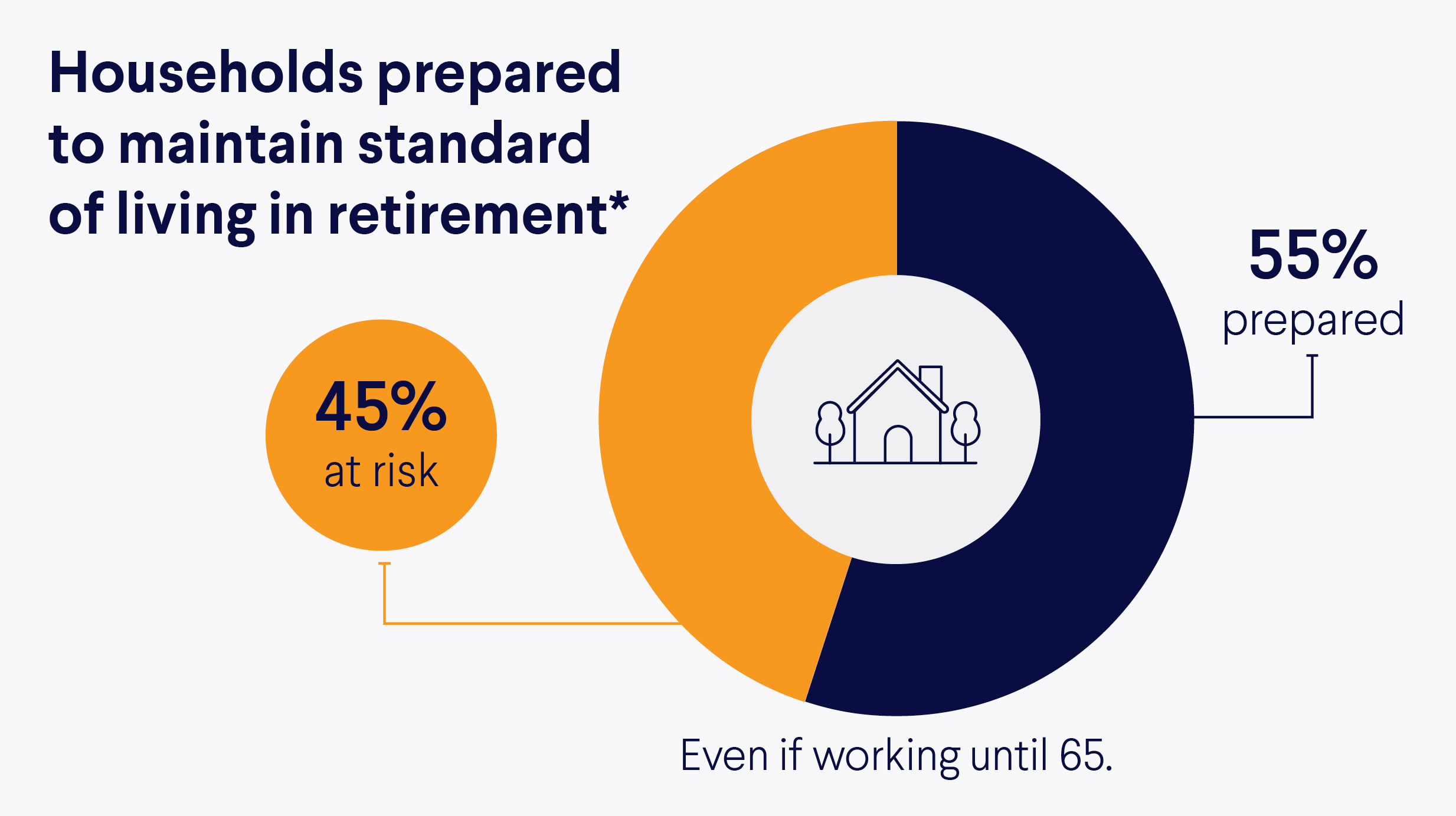
Inflation calculators can be an important tool when it comes to modeling different retirement outcomes.
FRAMING INFLATION RISK FOR CLIENTS
Inflation risk shows up differently across client profiles. Here are some ways advisors can frame conversations around both necessities (housing, insurance, healthcare) and lifestyle choices (travel, entertainment, subscriptions, etc.):
Couples: Joint longevity increases exposure—at least one spouse is likely to live long enough for inflation to compound heavily.
Singles and widows: Without partner benefits, they’re more exposed to shortfalls in purchasing power.
Those nearing retirement: Need clear modeling of how today’s income and other assets, such as stocks, bonds, and cash, will (or won’t) keep pace with 20–30 years of inflation.
Those living in retirement: Fixed income streams can erode quickly if not paired with growth or inflation-adjusted assets.
Most retirees have some protection against inflation through Social Security, pensions, or annuities with cost-of-living adjustments, but the level of risk varies depending on their specific income sources and financial situations.
“If your account value isn’t growing at least as fast as inflation, your purchasing power is going down.”
– Matthew McGinley
INFLATION AND THE OTHER L.I.V.E. (LONGEVITY, INFLATION, VOLATILITY, EMOTION) RISKS
Inflation rarely acts in isolation. It connects with and compounds every other retirement risk:
Longevity Risk
The longer clients live, the greater the compounding effect of inflation. Long-term care insurance can help address the financial risks of extended lifespans and rising healthcare costs.
Volatility Risk
A market downturn plus inflation doubles the challenge: clients withdraw more just to cover rising costs.
Emotion Risk
Clients feel inflation every time they shop, often triggering fear-based or short-term decisions.
“Unlike volatility, inflation is invisible until it compounds. Then it’s impossible to ignore.”
– Matthew McGinley
MEASURING INFLATION WITH THE CONSUMER PRICE INDEX
Understanding how inflation is measured is essential for anyone concerned about protecting their retirement purchasing power. The Consumer Price Index (CPI), published by the Bureau of Labor Statistics, is the primary tool used to track changes in the prices of a broad basket of goods and services. This index reflects the real-world impact of rising inflation on everyday expenses—everything from groceries and housing to transportation and healthcare—making it a vital reference point for retirees and those planning for retirement.
The CPI is more than just a number; it’s a direct measure of how much purchasing power money retains as prices rise. When the CPI increases, it signals that the cost of living is going up, and the same dollar buys fewer goods and services. This is the essence of purchasing power risk: as inflation erodes the real value of money, retirement savings may not stretch as far as planned.
The Federal Reserve closely monitors the CPI to guide its decisions on interest rates. When inflation rises rapidly, the Federal Reserve may raise interest rates to help combat rising inflation and stabilize the economy. While higher interest rates can boost returns on certain savings and fixed income investments, they can also lead to lower bond prices and increased borrowing costs. This delicate balance affects investment income and the overall performance of retirement accounts. It’s important to diversify investments across different asset classes to help keep pace with inflation and protect against purchasing power risk.
The CPI also plays a key role in evaluating the effectiveness of strategies designed to combat rising inflation. Investments in assets that historically perform well during inflationary periods, like real estate or certain commodities, can help generate income and preserve the real value of retirement savings. Additionally, understanding how the CPI affects required minimum distributions and the cost of living can help retirees make smarter decisions about spending and asset allocation.
HOW DOES INFLATION AFFECT INVESTMENTS?
Inflation reduces the real return of investments:
Cash and CDs: Historically underperform inflation.
Bonds: Provide fixed income but lose value in high-inflation environments.
Equities: Offer long-term growth, but with volatility. Investing in a diversified portfolio allows individuals to invest in the market, remain invested over time, and benefit from the potential of investing to outpace inflation.
Annuities: Can provide guaranteed income with options for market participation or fixed returns.
Advisors can help clients understand that beating inflation isn’t about one product; it’s about creating a balanced allocation of guaranteed income, protection, and growth. Growth-oriented investments are essential to help assets grow and have a better chance of outpacing inflation over time.
TALKING TO CLIENTS ABOUT INFLATION WITHOUT ALARM
You can shape the conversation by framing inflation in relatable, client-centered ways:
1. Start with must-haves. Focus on housing, insurance, healthcare, and utilities—the “necessities of life” bucket. Use this as an opportunity to discuss how much clients may need to save to cover these essential expenses in the future, especially as inflation increases costs.
2. Use real-world examples. Simple examples can be the most impactful—even just reviewing a sample grocery bill from 5 years ago versus today can illustrate how quickly costs compound and threaten purchasing power.
3. Ask discovery questions. “What expenses feel most essential to you?” “Which lifestyle elements do you never want to give up?”
This approach transforms inflation from an abstract threat into a concrete planning conversation. Consistent saving habits and strategies to safeguard savings are key to ensuring clients are prepared for rising costs in retirement.
STRATEGIES TO MANAGE INFLATION RISK
While there’s no one-stop solution, advisors can build layered strategies:
Fixed Index Annuities (FIAs): Offer downside protection while capturing interest from index-linked growth that can outpace inflation.
Income Annuities: Cover the “must-have” expenses with guaranteed lifetime income.
Diversified portfolios: Equities and real assets historically provide the strongest inflation hedge over long timeframes.
Manage withdrawals: Consider required minimum distribution rules for accounts like IRAs and 401(k)s
“It’s not one product—it’s the right mix to beat inflation while maintaining purchasing power over time.”
– Matthew McGinley
DELIVERING VALUE IN AN INFLATIONARY WORLD
With Delaware Life, you can address inflation risk through annuities designed to deliver:
Guaranteed income for must-have expenses.
Growth potential to help offset inflation.
Simplicity and transparency advisors can stand behind.
When it comes to inflation, your clients don’t just need stability. They need confidence that their purchasing power— and their lifestyle—can go the distance .
AND DON’T FORGET – WE’RE HERE TO HELP!
Reach out to your local wholesaler or IMO support team, or visit our L.I.V.E. hub for more resources and information.